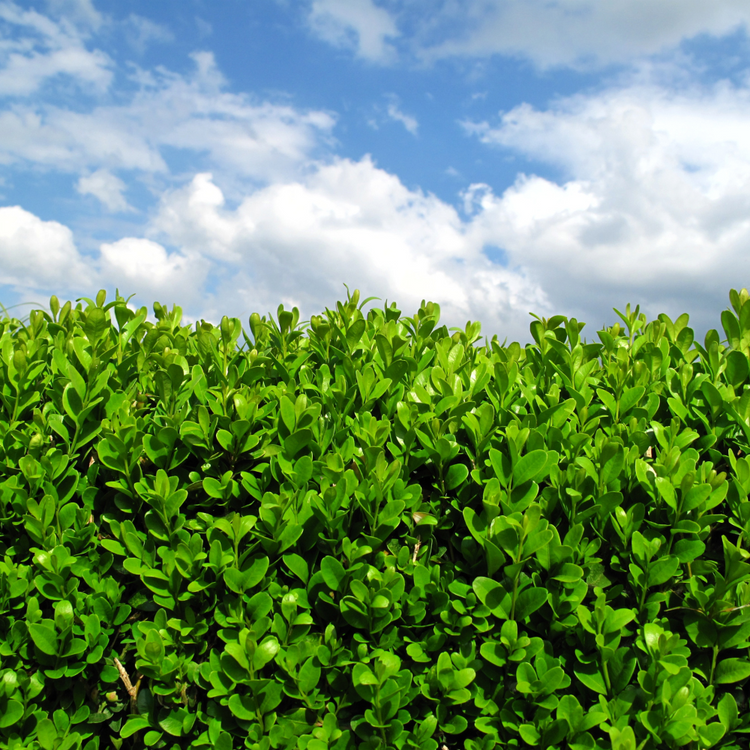
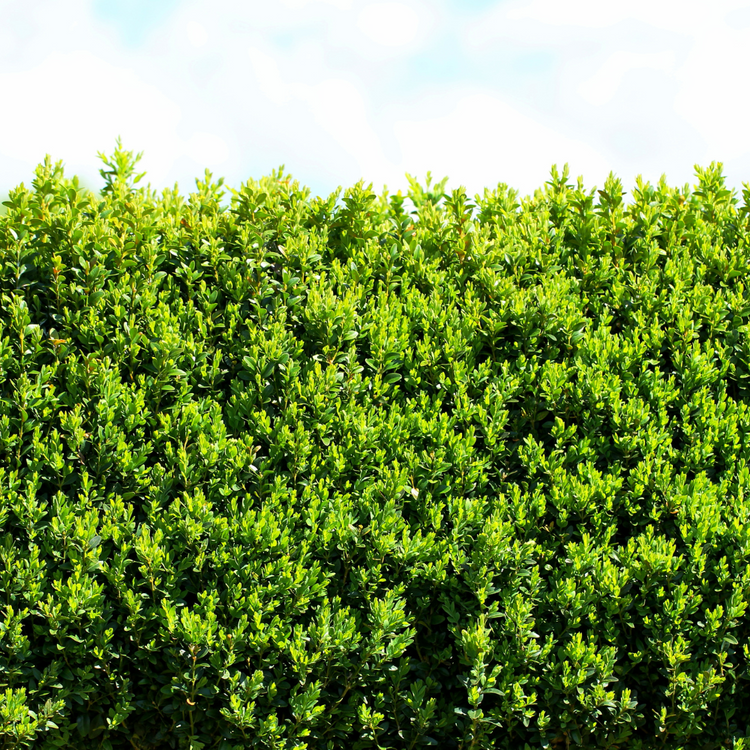
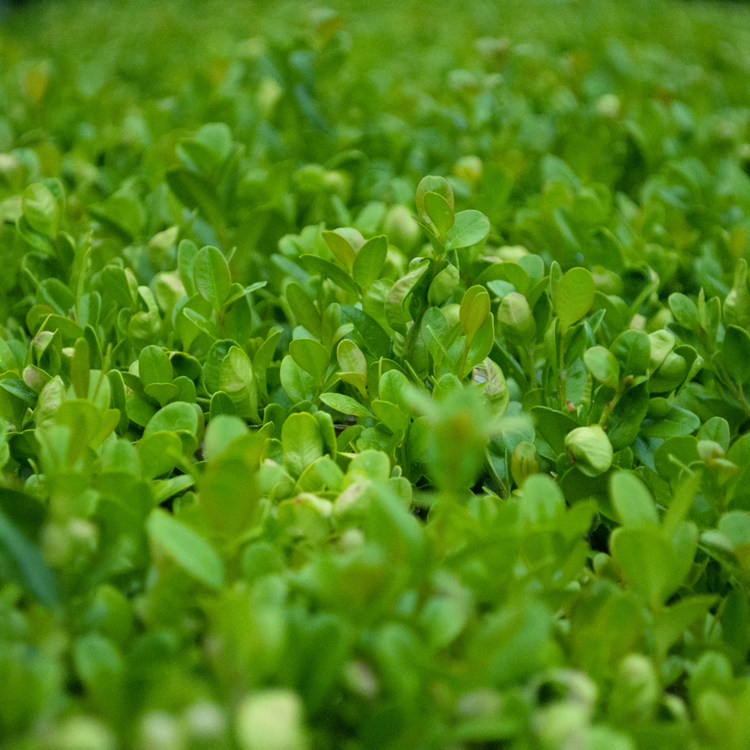
Box hedging plants (Buxus sempervirens), also known as boxwood hedge plants, are a popular evergreen hedging choice across the UK. Known for their dense, compact foliage and neat appearance, box hedge plants are ideal for creating formal hedges, borders, and topiary designs in both traditional and modern gardens.
Buxus sempervirens hedging plants are shade-tolerant and adapt well to most soil types, except for those that are overly wet or exposed to strong winds. Favoured for their dense, leafy structure, box hedging plants are a classic, versatile option that is easy to maintain. Although slow-growing, they can be easily trimmed and shaped to suit your garden design, forming a thick and attractive privacy hedge over time.
Due to their versatility and elegant appearance, box hedging is widely used in both urban and large formal gardens. These box hedge plants are ideal for creating borders, partitions, green walls, pathways, and intricate parterre knotwork designs. Buxus sempervirens remains one of the most popular hedging plants due to its flexibility and consistent performance.
The dense, small, round, dark evergreen leaves of Buxus sempervirens grow at an average rate of approximately 10–15 cm per year. For best results, trim your box hedge in late spring using hand garden shears, keeping the blade parallel to the hedge surface. For a lower-growing option, consider Dwarf Box Hedging (Buxus sempervirens Suffruticosa), or explore other low-growing hedging plants for more inspiration.
Box Topiary
Box hedging plants are highly sought after for topiary due to their compact growth and ability to hold shape. Popular options include box balls, cubes, and spirals, making Buxus sempervirens a favourite for decorative garden features.
With a variety of sizes and types of box hedging plants available, you can choose the ideal option for your garden project. If you're looking to buy box hedging plants in the UK, this species offers a reliable and long-lasting solution for structured planting.
Box Hedging Problems
While box hedging is incredibly popular, it can face certain challenges. However, most issues with Buxus sempervirens are manageable and rarely severe with proper care.
Should I Be Worried About Box Hedge Blight?
Box blight is a fungal disease that can affect box hedge plants. If you have experienced box blight before, it may be worth considering alternative hedging species, as the disease can remain in the soil for several years. However, many gardeners successfully grow Buxus sempervirens without issues.
To reduce the risk of blight, avoid over-clipping, which can increase humidity within the hedge, and remove any affected growth promptly. Watering at the base rather than overhead can also help prevent excess moisture. If necessary, fungicidal treatments may help control the issue.
Please do not let the risk of box blight deter you from choosing box hedging plants. This is a beautiful and functional evergreen hedge option.
What About Box Rust?
Box rust is a mild condition where some foliage may develop rust-coloured blisters. This does not usually cause long-term damage. Simply prune affected areas to maintain a healthy and vibrant box hedge.




 Slow Growth Rate
 Grown to 4m
 Evergreen
 Plant Guarantee